Women with polycystic ovary syndrome (PCOS) often describe the same frustrating cycle where they manage the unwanted hair growth, whether by waxing, threading, or laser, and it comes back. Moreover, even despite taking prescription medication, unwanted hair growth which previously appeared often persists.
PCOS-related hair growth is often described as difficult to treat because of its hormonal nature. What is discussed less often is how androgens change the follicles themselves, and why those changes do not reverse even if hormone levels later improve.
Understanding the hormonal basis of PCOS-related hair growth is an important first step before beginning treatment. Electrolysis treatment for PCOS in Melbourne permanently destroys treated follicles and addresses existing unwanted hair in a way that hormonal therapy alone cannot.
The Two Androgens Worth Understanding
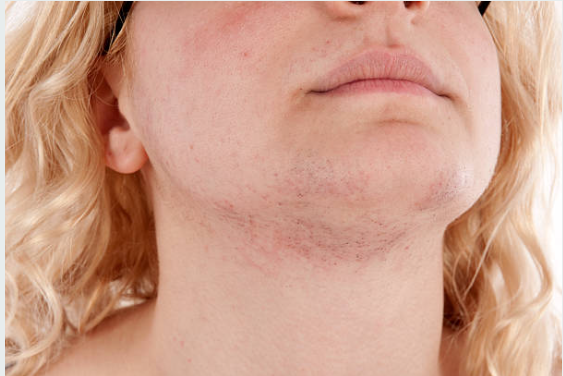
PCOS is commonly associated with androgen excess or increased androgen activity, although not all women with PCOS have elevated circulating androgen levels. Free testosterone is the biologically active fraction of testosterone available to act directly on tissues, while DHEA-S is an adrenal androgen precursor that is elevated in a subset of women with PCOS. Together, these hormones and their metabolites act on androgen-sensitive hair follicles, particularly those on the chin, jawline, upper lip, and neck, stimulating the transformation of fine vellus hairs into coarse terminal hairs. Once this transition has occurred, the follicle generally continues to produce terminal hair even if androgen levels later improve, which is why hormonal management alone cannot reverse existing unwanted hair.
According to Healthdirect Australia, PCOS causes signs of high androgen levels, including excess facial hair, and is managed with options such as the combined oral contraceptive pill and anti-androgens.
Why Hormonal Management for PCOS Alone Does Not Clear the Hair
Many women are surprised to learn that medications such as the combined oral contraceptive pill and spironolactone help manage the hormonal drivers of PCOS, but do not remove hair that is already present. By reducing androgen activity, these treatments can help limit future terminal hair growth, but they do not reverse follicles that have already been transformed. Once a follicle is producing terminal hair, electrolysis is required to permanently destroy that treated follicle.
Once the structural change to stimulate a hair follicle to produce coarse terminal hair has occurred, the hormonal signal that originally triggered it is no longer needed to maintain it.
Where Electrolysis Fits Into the Picture
Electrolysis works by inserting a hair-thin probe into the base of the hair follicle, and applying a tiny electrical current which triggers a chemical reaction that permanently eliminates the stem cells which produce new hair. The process operates at the follicle level and works independently of hormonal activity at the time of treatment.
Whether one’s androgen levels are elevated, suppressed by medication, or somewhere between the two, the treated follicle responds the same way to electrolysis and is permanently prevented from producing hair again.
The efficacy and versatility of electrolysis permanent hair removal is particularly relevant for women with PCOS, whose androgen levels often fluctuate rather than sit at a stable baseline. Electrolysis addresses the follicles that are already there and already active, without depending on the hormonal picture being resolved first.
Multiple electrolysis permanent hair removal sessions are required because hair grows at different speeds within its natural growth cycles. Since not all hairs are present or visible above the skin’s surface at any one time, a series of treatments ensures every follicle is addressed as it progresses through its individual cycle.
Note: Mild tingling or stinging during electrolysis treatment is normal, and some temporary redness or swelling may occur afterwards, typically resolving within a few hours with appropriate electrolysis aftercare.
Conclusion
Hormonal management and electrolysis play complementary roles in managing PCOS-related hair growth. Hormonal therapies help reduce androgen activity and slow the development of new terminal hairs, while electrolysis permanently destroys treated follicles that are already producing coarse hair. Used together, these approaches address both the underlying hormonal influence and the existing unwanted hair.